
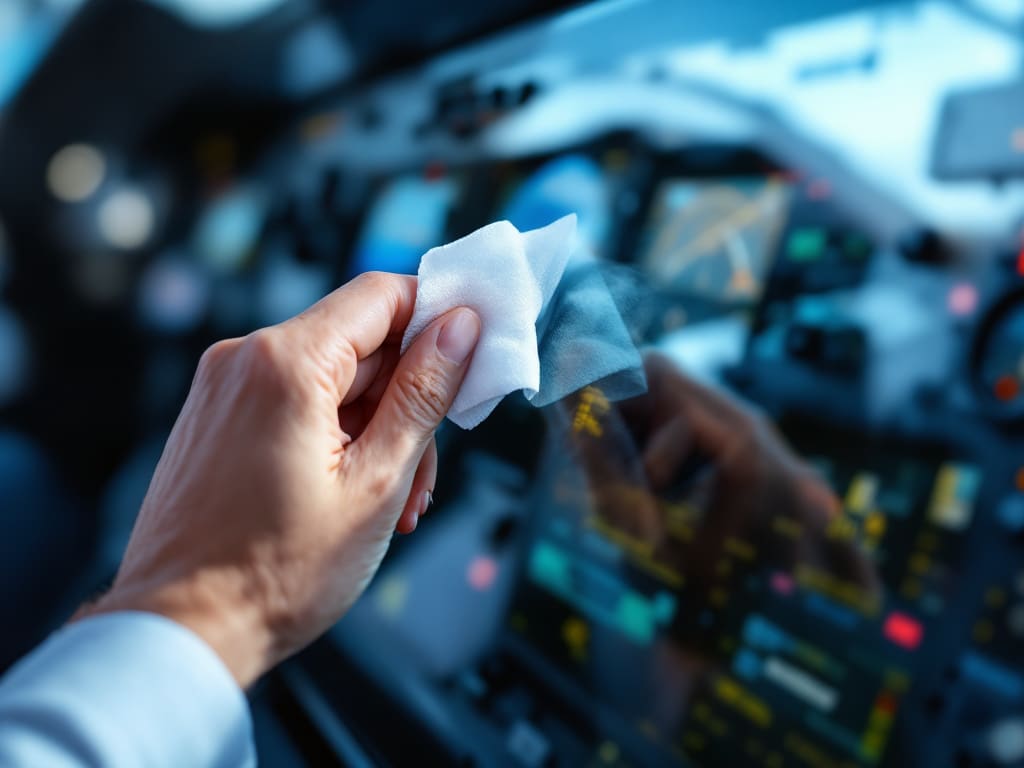
When you manage high-value cockpit displays and avionics, choosing the right aviation screen cleaning wipes is critical to preserve functionality and safety. You need solutions that are ammonia-free, non-abrasive, and compliant with aerospace material specifications. At Phoenix Wipes, we engineer premium wipes that meet rigorous standards while protecting sensitive coatings and touchscreens from streaks, scratches, and residue.
Understanding compliance standards
Aerospace material specifications
Your wipes must comply with industry-accepted specs such as AMS 3819B Class 2 Grade A and Boeing BMS 15-5F Class A, ensuring safe use on commercial and military aircraft interiors. Meeting these benchmarks guarantees compatibility with plastic substrates, glass panels, and anti-glare coatings.
Regulatory facility certifications
Look for products manufactured in an ISO 13485:2003 FDA-registered facility in the USA. This certification confirms quality management controls and traceability throughout production, giving you confidence in batch consistency and hygiene.
For more options, explore our full range of avionics screen cleaning products.
Selecting wipe formulations
Water-based and alcohol blends
An optimal formula combines purified water with isopropyl alcohol—typically around a 75:25 ratio—to dissolve oils and contaminants without damaging coatings. Avoid ethyl alcohol, silicone, or ammonia that can leave residues or void warranties.
Ammonia-free cleaning solutions
Ammonia can etch anti-reflective coatings and accelerate material degradation. Your wipes should rely on gentle surfactants and water-soluble agents that remove grease without harsh chemicals.
Fabric type and coating safety
Choose wipes made from aerospace-grade nonwoven fabrics like DuPont Sontara or equivalent, which resist lint and minimize scratching. For guidance on fabric choices, see our insights on non-abrasive wipes for avionics.
Protecting sensitive surfaces
Anti-glare and anti-reflective coatings
Modern glass cockpits feature multi-layer coatings that reduce glare and enhance readability. A suitable wipe will clean without stripping or dulling these finishes, preserving display clarity and contrast.
Avoiding scratches and streaks
Streaks and micro-abrasions can hamper visibility and trigger maintenance alerts. Use single-use, premoistened wipes sized for cockpit controls to ensure even coverage and prevent cross-contamination between instruments. For best practices on delicate panels, review our glass cockpit cleaning wipes safe guide.
Applying wipes correctly
Step-by-step cleaning guide
- Power down the display or engage clean-screen mode if available
- Remove a single premoistened wipe
- Wipe in gentle, overlapping strokes from one edge to the other
- Flip the wipe to a clean side for final buffing
- Let surfaces air-dry completely before reactivating controls
Cleaning touchscreen controls
When you clean touch-enabled displays, avoid pressing too hard. A light wipe preserves touchscreen calibration and avoids embedding particles under the glass.
For tailored procedures, check our glass cockpit wipe recommendations.
Storing and disposing wipes
Storage conditions
Keep wipes sealed in their original packaging at room temperature away from direct sunlight. Proper storage prevents premature drying and maintains cleaning efficacy.
Environmental and safety considerations
Dispose of used wipes according to your facility’s waste protocols. Many wipes are formulated to be biodegradable and free of toxic residues, aligning with environmental regulations and reducing disposal costs.
Conclusion
By selecting aviation screen cleaning wipes that meet aerospace specifications, feature ammonia-free formulas, and use non-abrasive fabrics, you protect your investment in advanced avionics. Following our guidelines ensures streak-free, scratch-free results and extends the life of your cockpit displays. Trust Phoenix Wipes for compliant solutions engineered to keep your screens mission-ready.
Disclaimer: The information provided in this guide is for educational and informational purposes only and does not supersede official manufacturer guidelines. While we strive to provide accurate recommendations based on industry standards (AOPA, Aviation Consumer), always consult your specific avionics Pilot’s Operating Handbook (POH) or the Original Equipment Manufacturer (OEM) maintenance manual before applying any cleaning agents. Phoenix Wipes Inc. assumes no liability for damage to anti-reflective coatings, screens, or instruments resulting from the use of the methods or products described herein.
