
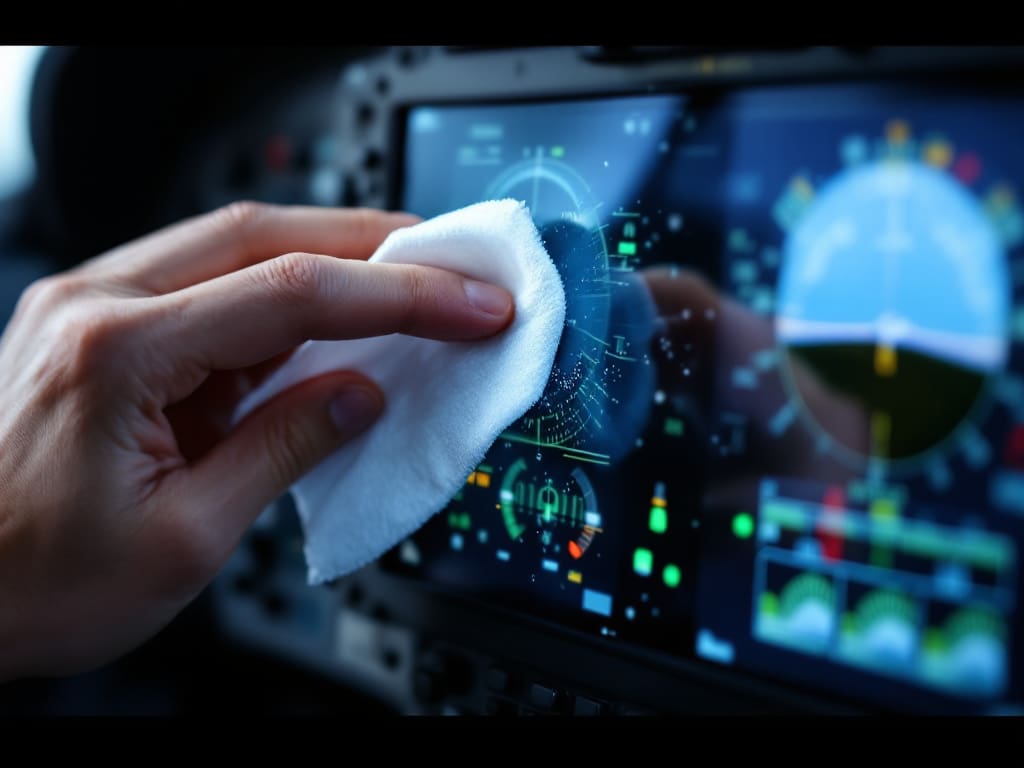
Avionics screen cleaning products are essential for protecting your cockpit displays from scratches, coating damage, and contamination. When you rely on non-compliant solutions, you risk harming anti-reflective coatings, compromising readability, and encountering costly repairs. This guide walks you through choosing and using the safest cleaning agents for all your glass cockpit screens and instruments.
You’ll learn how to avoid ammonia-based cleansers, apply isopropyl alcohol methods safely, select lint-free fabrics, and maintain a regular cleaning routine. Whether you need non-abrasive wipes for avionics or detailed glass cockpit cleaning wipes safe recommendations, this article has you covered.
Assess your cleaning needs
Identify sensitive surfaces
Glass cockpit displays often feature anti-glare and anti-reflective coatings that improve visibility in bright conditions. These coatings are prone to scratches, clouding, and chemical damage when exposed to harsh cleaners or abrasive materials (Aviation Consumer).
Understand coating vulnerabilities
- Anti-reflective layers can degrade with ammonia-based cleansers (AOPA).
- Polycarbonate and acrylic lenses scratch easily under abrasive cloths or particles.
- Anti-glare finishes require gentle wiping to avoid streaks and residue.
Choose compliant cleaning agents
Avoid ammonia-based solutions
Garmin explicitly warns against any ammonia-containing products for glass avionics displays and recommends ammonia-free formulas only (AOPA). Ammonia can etch the anti-reflective coating, causing permanent clarity loss and increased glare.
Use isopropyl alcohol methods
A 70 percent isopropyl alcohol solution is effective for disinfection and safe for most avionics screens as long as:
- The solution contains no ammonia.
- The surface remains wet for at least 30 seconds (AOPA).
- You use a clean, lint-free cloth to prevent fiber shedding.
Select aviation-grade wipes
Look for lint-free fabrics
Premoistened wipes should feature aerospace-grade materials, such as non-woven Sontara or microfiber blends, to avoid lint, scratches, and loose fibers on sensitive displays (Aviation Consumer).
Check wipe formulations
When evaluating wipes, verify they meet these criteria:
- Water-based formula with minimal surfactants.
- No ethyl alcohol or methanol to protect plastic lenses.
- Includes isopropyl alcohol or alkyl polyglycoside for effective cleaning and mild antibacterial action (Aviation Consumer).
- Individually wrapped packaging to maintain moisture and hygiene.
You can explore our glass cockpit wipe recommendations to find compliant products that meet your workflow and storage requirements.
Follow proper cleaning steps
Prep and test small areas
Before full-screen cleaning, always:
- Power down instruments and disconnect power if possible.
- Wipe a small corner of the display with your chosen wipe or solution to confirm compatibility.
- Inspect for any adverse effects on coating or surface.
Wipe screens safely
- Fold the cloth to create a fresh cleaning area.
- Apply gentle, even pressure in one direction.
- Avoid circular scrubbing which can trap particles and cause scratches.
- If streaks remain, use a dry lint-free section to buff lightly.
Clean knobs and bezels
Use a damp cloth with mild soap, then rinse and dry thoroughly to prevent residue buildup and slipperiness (AOPA). Never spray liquids directly onto panels to avoid moisture ingress into connectors and circuit boards.
Implement maintenance routines
Schedule regular cleanings
Establish a maintenance plan that aligns with flight hours or calendar intervals. Regular wipe-downs prevent grime buildup and reduce the need for intensive cleanings that carry higher risk.
Train your team
Document standard operating procedures for screen cleaning and provide hands-on training. Emphasize:
- Choice of compliant products.
- Correct wiping technique.
- Safe disposal of used wipes.
Store and dispose wipes
Keep wipes moisture sealed
Store premoistened wipes in airtight containers to maintain their cleaning efficacy and prevent drying out.
Comply with disposal rules
Dispose of used wipes in accordance with your facility’s hazardous waste protocols if they contain isopropyl alcohol or other regulated agents. This reduces environmental impact and meets safety standards.
Consider Phoenix Wipes solutions
Aviation wipe offerings
Phoenix Wipes Inc specializes in manufacturing high-quality aviation-grade cleaning wipes that adhere to all regulatory requirements. Your team can choose from:
- Individually wrapped aviation screen cleaning products.
- Large resalable packs for high-volume maintenance.
- Customizable wipe saturation levels to match your cleaning protocols.
Choose customizable packaging
Keep your wipes accessible and protected with options for bulk canisters, dispenser boxes, or station-ready kits. Each packaging style ensures wipes stay moist and ready for immediate use in hangars or flight decks.
Protect your avionics investment by selecting compliant cleaning agents, following proven techniques, and using Phoenix Wipes’ aviation-grade solutions. For a full range of aviation screen cleaning wipes and expert support, contact Phoenix Wipes Inc today.
Disclaimer: The information provided in this guide is for educational and informational purposes only and does not supersede official manufacturer guidelines. While we strive to provide accurate recommendations based on industry standards (AOPA, Aviation Consumer), always consult your specific avionics Pilot’s Operating Handbook (POH) or the Original Equipment Manufacturer (OEM) maintenance manual before applying any cleaning agents. Phoenix Wipes Inc. assumes no liability for damage to anti-reflective coatings, screens, or instruments resulting from the use of the methods or products described herein.