
Private Label · Cabin Hygiene
Screen & Touchpoint Wipes
We manufacture private label screen and touchpoint wipes that clean without smearing and without attacking the oleophobic coating that makes a touchscreen work. Made in the USA for airlines, IFE suppliers, electronics brands and travel retail.
ANTI-SMEAR · COATING-SAFE · AMMONIA-FREE · LINT-FREE

Excluded
Ammonia and alcohol at damaging levels
Finish
Streak-free, lint-free
Surfaces
IFE screen, remote, call button
Shelf life
24–36 months
How it works
The coating is the thing you are protecting
Every modern touchscreen carries an oleophobic coating — a microscopically thin fluorinated layer that repels the oil in fingerprints and lets a finger glide. It is the single component that makes a touchscreen feel responsive rather than sticky, and it is consumable: it wears with use and it is destroyed rapidly by the wrong chemistry. Ammonia-based glass cleaners strip it. High alcohol concentrations degrade it. Once it is gone the screen smears permanently, feels tacky, and on an IFE unit that means a passenger complaint on every subsequent flight and eventually a replacement bill.
So a screen wipe is defined by what it must not do. Ours is ammonia-free, uses alcohol only at a controlled low level or not at all, and relies on a mild surfactant system that lifts fingerprint oil and the aerosolised sebum that coats a seatback screen. The other half of the problem is smearing: too much liquid and it pools in bezels and dries in streaks; too little and the oil is pushed around rather than lifted. Saturation on a screen wipe is a narrower window than on any other product we make.
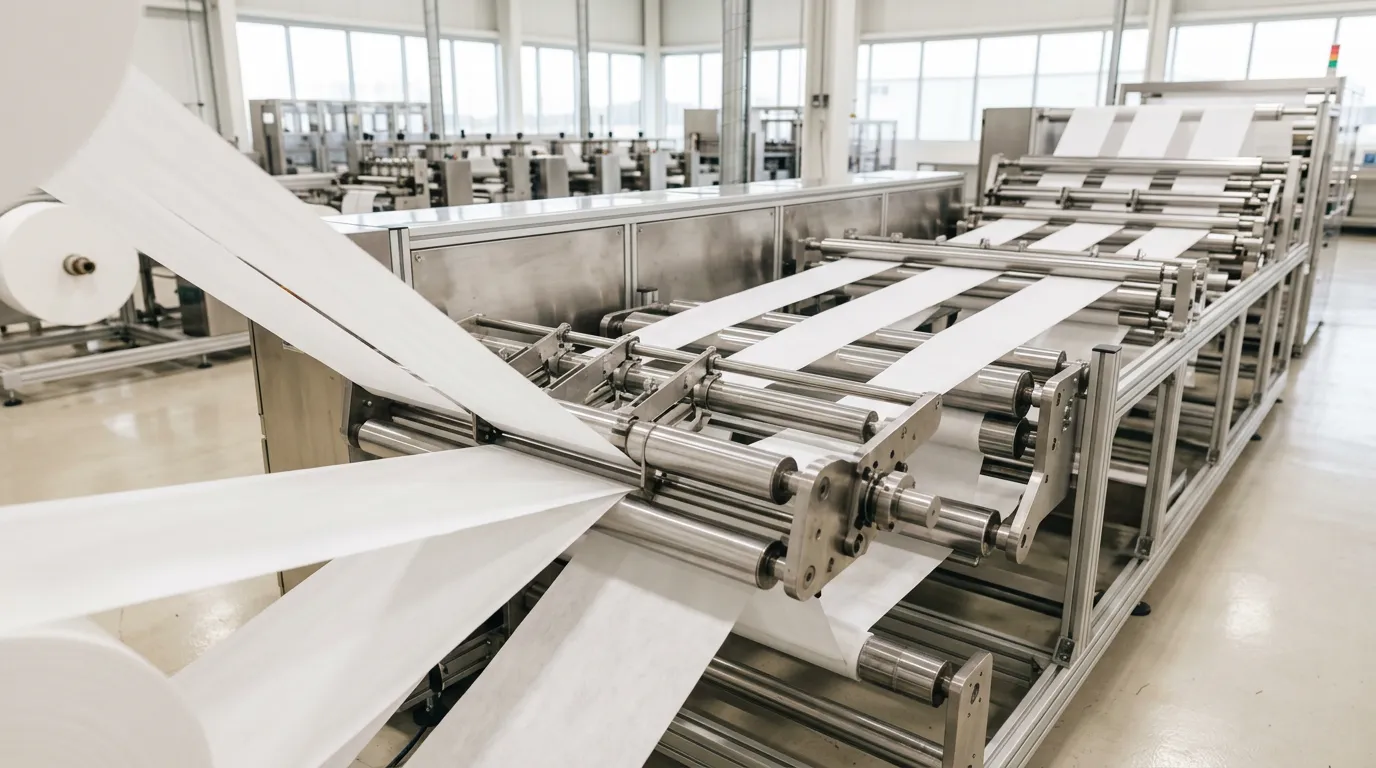
The substrate must be genuinely lint-free — a hydro-entangled microfibre or fine spunlace, since loose fibres on a screen are the most visible possible failure — and soft enough not to abrade a coating it is meant to protect. For cabin use there is one further requirement: the same wipe is used on remotes, call buttons, recline switches and handset keypads, which are plastics and printed membranes with their own compatibility limits. A wipe that is safe on glass but crazes a printed keypad has simply moved the maintenance problem somewhere else.
At a glance
✓Ammonia-free — ammonia strips oleophobic coating
✓Alcohol controlled or absent
✓Saturation tuned to a narrow anti-smear window
✓Hydro-entangled lint-free substrate
✓Compatible with printed membranes and keypads
The oleophobic coating is consumable. The wrong wipe destroys it, and the screen smears permanently afterwards.
Applications
Where screen wipes are used
A small wipe with an outsized maintenance impact — IFE units are among the most expensive consumables in a cabin.
01
IFE screen cleaning
Seatback monitors between sectors. Fingerprints and aerosolised sebum build up fast, and a smeared screen is one of the most commonly noticed cabin defects.
02
Touchscreen & handset
Passenger control units, touch handsets and keypads — printed membranes with their own chemical compatibility limits.
03
Call buttons & recline switches
Small high-touch controls that every passenger presses and few cleaning protocols cover explicitly.
04
Crew tablets & EFB devices
Electronic flight bags, crew tablets and payment terminals — expensive devices handled constantly through a duty.
05
Lounge & kiosk screens
Self-service check-in kiosks, lounge displays and shared workstations on the ground.
06
Retail & consumer electronics
A direct crossover market — the identical formulation sells as a consumer screen wipe with different packaging.
Specifications
Screen wipe specifications
This is the most exclusion-driven specification in the inflight range, and saturation tolerance is the tightest.
| Excluded absolutely | Ammonia; high-concentration alcohol |
|---|---|
| Alcohol | Controlled low level or none |
| Cleaning system | Mild surfactant for fingerprint oil and sebum |
| Coating safety | Validated against oleophobic-coated glass |
| Finish | Streak-free, no bezel pooling |
| Saturation | 1.5–3 g per wipe — narrow tolerance window |
| Substrate | Hydro-entangled microfibre or fine spunlace, lint-free |
| Standard wipe sizes | 4″ × 5″ · 5″ × 7″ |
| Material compatibility | Coated glass, acrylic, printed membranes, keypads, ABS |
| Antistatic option | Available — reduces dust re-attraction |
| Antibacterial option | Low-level BZK where a hygiene claim is needed |
| Shelf life | 24–36 months unopened |
Packaging formats
- Single sachet1 wipe, printed
- Twin sachetWet + dry polish pair
- Canister50–100 wipes
- Service cartonBulk sachets
- Crew pack20 wipes, EFB use
- Retail pack20 sachets, consumer
A wet-plus-dry twin sachet is the best-performing format on screens: the wet wipe lifts the oil, the dry cloth buffs off residual moisture before it dries into streaks. It is the closest thing to a guaranteed streak-free result.
Comparison
Comparing the cabin hygiene range
Screen wipes are the most specialised of the three — a maintenance-protection product as much as a hygiene one.
| Product | Category | Format | Where it is used | Specify carefully |
|---|---|---|---|---|
| Tray Table & Armrest Wipes | Cabin hygiene | Sachet or canister | Passenger-facing high-touch surfaces | EPA claim, dwell time, material safety |
| Crew Cleaning Wipes | Cabin hygiene | Canister or bucket | Galley, lavatory, cart, turnaround | Speed, residue, hand tolerance |
| Screen & Touchpoint WipesThis page | Cabin hygiene | Small sachet or pack | IFE screens, remotes, call buttons | Anti-smear, coating safety, lint-free |
Private Label & OEM
Protecting an asset, not just cleaning it
IFE units are expensive, and a stripped oleophobic coating means a permanently smeared screen and eventually a replacement. Specifying an ammonia-free, coating-validated, lint-free wipe is cheap insurance against a maintenance cost that dwarfs the consumable spend — and it is an argument that lands with engineering as readily as with cabin services.
✓Ammonia-free and coating-validated formulation
✓Saturation tuned within the anti-smear window
✓Genuinely lint-free hydro-entangled substrate
✓Compatibility confirmed on printed membranes and keypads
✓Wet + dry twin sachet for streak-free results
FAQ
Screen cleaning wipes FAQ
Why can’t I use a normal disinfectant wipe on a screen?
Because of the oleophobic coating — the microscopically thin fluorinated layer that repels fingerprint oil and lets a finger glide. Ammonia-based cleaners strip it and high alcohol concentrations degrade it. Once it is gone the screen smears permanently and feels tacky, and on an IFE unit that becomes a recurring passenger complaint and eventually a replacement cost.
What makes a screen wipe streak-free?
Saturation control, mostly. Too much liquid pools in bezels and dries into streaks; too little pushes the fingerprint oil around instead of lifting it. The usable window is narrower than on any other wipe we make — 1.5 to 3 grams — which is why a wet-plus-dry twin sachet gives the most reliable result.
Are screen wipes safe on touchscreens and keypads?
Ours are specified for both, which matters in a cabin because the same wipe gets used on the screen, the handset, the call button and the recline switch. Those are printed membranes and plastics with their own compatibility limits — a wipe that is safe on glass but crazes a printed keypad has just moved the maintenance problem. Our guide to cleaning electronics with wet wipes covers the coatings and surfaces to avoid.
Can screen wipes also disinfect?
A low level of benzalkonium chloride can support an antibacterial claim without damaging the coating, and it is a reasonable choice for shared touchpoints. What you cannot do is use a full-strength surface disinfectant on a screen — the chemistry that makes it effective on a tray table is what destroys the coating.
Why does lint matter so much on a screen wipe?
Because it is the most visible possible failure. A fibre left on a backlit screen is immediately obvious to a passenger, and it makes the cleaning look worse than not cleaning at all. We use hydro-entangled substrates where fibres are locked mechanically rather than glued, so there is far less loose material available to shed.
Do you offer an antistatic version?
Yes. An antistatic additive reduces the surface charge that attracts airborne dust back to a freshly cleaned screen — which in a cabin, with constant air circulation and high passenger throughput, meaningfully extends how long the screen stays looking clean.
Other inflight wipes we make
The cabin hygiene family, plus the comfort products distributed alongside.
Cabin Hygiene
Tray Table & Armrest Wipes
Registered disinfectant wipes for tray tables and armrests.
View details →
Cabin Hygiene
Crew Cleaning Wipes
Heavy-duty galley and lavatory wipes for turnaround work.
View details →
Comfort
Refreshing Facial Towelettes
The passenger comfort towelette, often in the same service pass.
View details →
← All Inflight Wipes Full product range Wipes for airlines Wipes for hospitality Makeup remover wipes Facial wipes Wet wipes for airlines
Protect your IFE screens
Ammonia-free, coating-validated, lint-free, wet+dry option. Made in the USA.