
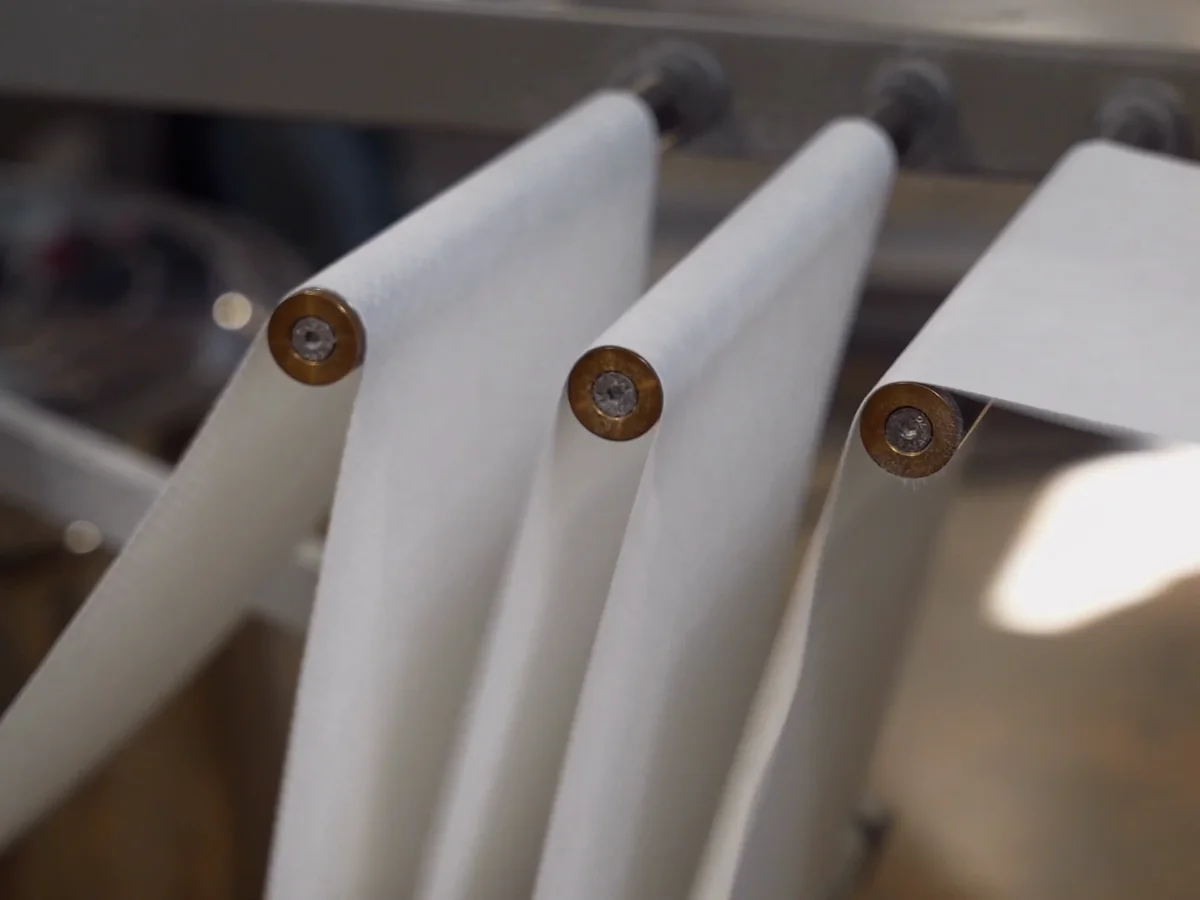
Spunlace, spunbond and airlaid are three ways of making a nonwoven fabric. Spunlace is bonded by water jets, so it is soft and strong without a binder, which makes it the usual choice for wet wipes. Airlaid is bulkier and more absorbent but weaker when wet. Spunbond is strong and cheap, but stiff and barely absorbent.
The process is only half the specification. The fibre blend and the weight of the fabric matter as much, and for a germ-kill wipe the substrate can change how the formula performs. This guide explains each process, compares them in one table and shows which substrate suits which wipe.
What a nonwoven fabric is
A nonwoven is a sheet made directly from fibres, or from molten polymer, that are bonded together mechanically, thermally or chemically instead of being spun into yarn and woven or knitted. INDA, the US nonwovens industry association, defines them as flat, porous sheets made directly from separate fibres or from molten plastic or plastic film (INDA, About nonwovens).
Every nonwoven is made in two steps: a loose web of fibres is formed, then the web is bonded. The names spunlace, spunbond and airlaid describe those two steps, which is why the same fibre can make very different fabrics (EDANA, How are nonwovens made). For a wipe, a nonwoven is the right choice over a woven cloth because it is cheaper to make, can be engineered for softness or strength, and does not fray when cut.
Spunlace: bonded by water jets
Spunlace, also called hydroentangled nonwoven, starts with a web of staple fibres. Rows of high-pressure water jets drive through the web and knot the fibres around each other. No latex or chemical binder is needed, so the fabric is soft, drapes well and holds together when wet.
Spunlace is the standard substrate for baby wipes, cosmetic and facial wipes and most personal care wipes, because it feels like cloth on skin and releases lotion evenly. It can be made plain, embossed with a pattern or apertured with small holes, and from viscose, polyester, lyocell, cotton or blends of them.

Airlaid: cellulose fibres laid in air
Airlaid is made from short fibres, mostly wood pulp, carried in an air stream onto a moving screen. The web is then bonded with latex, with heat-activated binder fibres, or with both. The result is bulky, very absorbent and paper-like, and usually costs less than spunlace.
Its weaknesses for a wet wipe are wet strength and lint: airlaid loses more strength when saturated and sheds more fibre. It suits large, absorbent industrial and cleaning wipes, napkins and table covers better than a wipe for the face or a lens.
Spunbond and meltblown: made from molten polymer
Spunbond is made by extruding molten polymer, usually polypropylene, into continuous filaments that are laid into a web and bonded with heat. It is strong, light and cheap, but stiff and poorly absorbent unless it is treated, which is why it is used in diaper covers, medical gowns and shopping bags rather than as a wet wipe on its own.
Meltblown uses the same polymers but blows them into extremely fine fibres. It is made for filtration, as in face masks, not for wiping. The two are often layered together, and spunbond is sometimes combined with pulp or other fibres to make a stronger wipe.
Wetlaid and dispersible substrates
Wetlaid nonwovens are formed like paper: short fibres are suspended in water and drained on a screen. Combined with light hydroentangling, wetlaid webs are the basis of most dispersible wipes, which are designed to break apart after flushing. A standard spunlace is deliberately the opposite, built to stay strong when wet, which is why a wipe sold as flushable needs a different substrate and its own testing. Our guide to what makes a wet wipe flushable covers this.
Spunlace vs spunbond vs airlaid: side-by-side comparison
The values below are relative, for typical wipe-grade fabrics. A specific grade can sit outside them, so compare samples of the actual fabric.
| Property | Spunlace | Airlaid | Spunbond |
|---|---|---|---|
| How it is bonded | High-pressure water jets, no binder | Latex, heat or both | Heat, from molten filaments |
| Typical fibres | Viscose, polyester, lyocell, cotton and blends | Wood pulp with binder fibres | Polypropylene or polyester |
| Softness | High, cloth-like | Medium, paper-like | Low, stiff |
| Wet strength | High | Low to medium | High |
| Absorbency | Medium to high, blend dependent | High | Low unless treated |
| Lint | Low | Higher | Low |
| Relative cost | Medium to high | Low to medium | Low |
| Typical wipe use | Baby, cosmetic, personal care, lens and medical wipes | Industrial and large absorbent wipes | Rarely alone; as a layer in composite wipes |

The fibre blend matters as much as the process
Within spunlace, the blend is where the wipe is designed:
- Viscose is regenerated cellulose. It is soft and absorbent and wets out quickly, but it is weaker when wet.
- Polyester keeps its strength wet, sheds little and resists solvents, but absorbs less and feels more synthetic.
- Lyocell is also regenerated cellulose, made in a closed-loop solvent process, and sits between viscose and polyester on strength.
- Cotton gives a natural positioning and a soft hand, usually at a higher price.
Basis weight, measured in grams per square metre (gsm), sets how thick the wipe feels and how much lotion it can hold. A heavier sheet is not automatically stronger; strength depends mostly on the fibres and the bonding.
Whether a wipe “contains plastic” depends on these fibres, not on the process. Polyester and polypropylene are synthetic polymers; viscose, lyocell and cotton are cellulose. The definitions differ by market: the EU, for example, requires wet wipes that contain plastic to carry a marking on the pack (Commission Implementing Regulation (EU) 2020/2151). In the US, environmental claims such as “plastic-free” or “biodegradable” have to be substantiated under the FTC’s Green Guides.
Which substrate for which wipe
- Baby wipes: soft, viscose-rich spunlace, often embossed, with enough wet strength not to tear in use.
- Makeup remover and facial wipes: spunlace chosen for hand feel and how quickly it releases the lotion; textured grades for exfoliating wipes.
- Disinfecting surface wipes: quaternary ammonium actives can bind to cellulose fibres such as viscose and cotton, which reduces how much reaches the surface. Quat wipes are therefore usually made on synthetic-rich substrates, and the efficacy data has to come from the product as sold, on its actual substrate.
- Lens and screen wipes: fine, low-lint spunlace, often polyester-rich.
- Industrial and heavy-duty wipes: strong polyester-rich spunlace for solvents, or airlaid where absorbency matters more than lint.
- Flushable wipes: a dispersible wetlaid substrate tested against flushability guidelines, never a standard spunlace.
How to specify a substrate in a quote request
A substrate is specified with five details. Giving them up front makes quotes comparable:
- Process: spunlace, airlaid, spunbond or a composite.
- Fibre blend and ratio, for example 70/30 viscose/polyester.
- Basis weight in gsm.
- Structure: plain, embossed or apertured.
- Wipe size and fold, which set how much fabric each pack uses.
If you do not know the right blend yet, describe the use instead: who uses the wipe, on what surface, and with what lotion. A manufacturer can then propose a substrate and sample it. For the rest of the brief, see what to send for a private label wipes quote, and for the terms used here, our wet wipes glossary. To see where the substrate fits in the wider process, read how wet wipes are made.
Substrates at Phoenix Wipes
Phoenix Wipes is a US private label manufacturer of wet wipes in Holbrook, New York, specialising in individually wrapped wipes in full-colour printed sachets. We run spunlace, airlaid and blended nonwovens, and choose the fibre blend and weight for each product rather than fitting every wipe to one fabric. OEKO-TEX and FSC-certified viscose are available where a brand’s positioning requires them, and we offer plant-based and flushable options.
See our spunlace nonwoven wipes for blends and structures, our dry wipes and industrial wipes, or wet wipes such as baby wipes. When you are ready, send us your specification and we will propose a substrate and sample it with your formula.
Frequently asked questions
What is the difference between spunlace and spunbond?
Spunlace is made from staple fibres knotted together by water jets, so it is soft and absorbent. Spunbond is made from continuous polymer filaments bonded with heat, so it is strong but stiff and poorly absorbent. Spunlace is used for wet wipes; spunbond is used for gowns, bags and diaper covers.
Is spunlace plastic?
It depends on the fibre. Spunlace made from polyester or polypropylene contains plastic. Spunlace made from viscose, lyocell or cotton is cellulose-based. Many wipes use blends, so check the fibre ratio and the definition used in the market where you sell.
What is airlaid?
Airlaid is a nonwoven made by laying short pulp fibres in an air stream and bonding them with latex or heat. It is bulky and very absorbent, and is used for napkins, table covers, absorbent cores and some industrial wipes.
What does gsm mean for wipes?
Grams per square metre: the weight of the fabric. It indicates thickness and how much lotion the wipe can hold. Strength depends more on the fibres and the bonding than on gsm alone. Our wet wipes GSM guide lists common ranges by type of wipe.
Which fabric is used for baby wipes?
Most baby wipes use spunlace, usually viscose-rich or a viscose and polyester blend, chosen for softness and enough wet strength not to tear in use.
Is woven or nonwoven better for wipes?
Nonwoven. It is cheaper to make, can be engineered for softness, strength or absorbency, and does not fray when cut, which is why almost all disposable wipes are nonwoven.
How this guide was put together: process descriptions follow INDA and EDANA; the comparison table gives relative values for typical wipe-grade fabrics rather than figures for any one grade; regulatory references link to the EU and FTC sources. Phoenix Wipes’ substrate options are taken from our own product pages. Last reviewed: November 2026.
Discover more from Phoenix Wipes Inc.
Subscribe to get the latest posts sent to your email.