
Private Label · Disinfectant
Bleach Wipes
We manufacture private label germicidal bleach wipes at 0.55% sodium hypochlorite — the concentration hospitals use when spores are the problem. Made in the USA for outbreak response, terminal cleaning and long-term care programmes that need a documented sporicidal claim.
0.55% NaOCl · SPORICIDAL · C. DIFF & NOROVIRUS · MADE IN THE USA

Active
0.55% Sodium Hypochlorite (5,500 ppm)
Kills
C. difficile spores, MRSA, norovirus
Contact time
1–4 minutes by organism
Shelf life
12–18 months
How it works
The only chemistry here that reliably kills spores
Sodium hypochlorite works by oxidation and chlorination — it attacks protein and enzyme structures, disrupts cell metabolism and destroys nucleic acids. Crucially, it does this to bacterial spores as well as to vegetative cells. Clostridioides difficile survives in the environment as a spore that shrugs off alcohol, quats and most other chemistries; hypochlorite at 5,500 ppm available chlorine does not care. That single property is the reason bleach wipes exist as a distinct product category in healthcare.
The standard clinical concentration is 0.55% sodium hypochlorite — roughly a 1:10 dilution of household bleach, stabilised so the available chlorine is still at label strength when the canister is opened months later. Contact time runs from about one minute for MRSA and enveloped viruses to four minutes for C. difficile spores, and the surface must remain visibly wet for that whole period.
Bleach demands respect in three ways. It must be used on a pre-cleaned surface — organic soil consumes available chlorine before it reaches the pathogen. It is corrosive to some metals and will discolour fabrics, carpets and unsealed surfaces. And it has a distinct odour that limits use in occupied rooms. Facilities therefore run bleach as a targeted tool, not a daily one, alongside a quat for routine work.
At a glance
✓0.55% sodium hypochlorite (5,500 ppm available chlorine)
✓Sporicidal — kills C. difficile spores
✓Effective on MRSA, VRE, norovirus, RSV, influenza
✓Stabilised formulation holds strength through shelf life
✓EPA List K / sporicidal claim support
Requires: pre-cleaned surface, visible wetness for full dwell time, and PPE per label. Corrosive to some metals; discolours fabrics.
Applications
Where bleach wipes are used
A targeted, protocol-driven product. Buyers are almost always responding to a specific organism or a specific audit finding.
01
C. difficile isolation rooms
The core application. Daily and terminal disinfection of rooms under contact precautions, where a sporicidal claim is mandatory rather than preferable.
02
Norovirus outbreak response
Cruise ships, schools, long-term care and hospitality outbreaks, where hypochlorite is the fastest reliable answer to a non-enveloped virus spreading through a closed population.
03
Terminal & discharge cleaning
Full room turnover after a patient with a multi-drug-resistant organism, where the next occupant’s risk is the whole point of the exercise.
04
MRSA & VRE decolonisation
Environmental disinfection in surgical wards and dialysis units as part of a resistant-organism control bundle.
05
Long-term care & hospice
Bathroom, commode and high-touch surface disinfection where residents are frail and gastrointestinal outbreaks spread fast.
06
Laboratory & mortuary
Bench, sink and equipment decontamination where the organism is unknown and worst case must be assumed.
Specifications
Bleach wipe specifications
Available chlorine at end of shelf life is the number that matters. Everything else on this table is negotiable.
| Active ingredient | 0.55% w/w sodium hypochlorite |
|---|---|
| Available chlorine | 5,500 ppm (≈1:10 household bleach dilution) |
| Alternative strengths | 0.25% – 0.65% NaOCl to claim requirement |
| Substrate | Bleach-compatible nonwoven, 50–75 gsm |
| Standard wipe sizes | 6″ × 5″ · 6″ × 7″ · 9″ × 12″ · 12″ × 12″ |
| Saturation | 4–8 g solution per wipe |
| Contact time | 1 min (MRSA, enveloped virus) – 4 min (C. difficile) |
| Efficacy | Sporicidal, bactericidal, virucidal, fungicidal, tuberculocidal |
| Pre-clean required | Yes — organic soil consumes available chlorine |
| Material cautions | Corrosive to some metals; discolours fabrics |
| Shelf life | 12–18 months unopened (chlorine decay) |
| Registration | EPA registration and List K claim support |
Packaging formats
- Canister70 / 110 / 150 wipes
- Softpack60–100 wipes, resealable
- Large-format9″ × 12″ terminal-clean wipe
- Single sachet1 wipe, outbreak kit format
- Bucket refill110–150 large wipes
- Bulk caseCustom count, master-carton labelled
The substrate has to be chosen for the chemistry: hypochlorite degrades cellulose-rich nonwovens, so a bleach wipe on the wrong substrate loses both strength and wet-strength before expiry. We use a bleach-compatible blend as standard.
Comparison
Bleach vs. the other medical wipe chemistries
Bleach is the strongest and the most demanding chemistry we make. It should be the second disinfectant in a range, never the only one.
| Product | Active ingredient | Kill spectrum | Best for | Applied to |
|---|---|---|---|---|
| Alcohol Wipes | 70% isopropyl alcohol | Bacteria, fungi, enveloped viruses. Not sporicidal | Fast skin prep before injections & blood draws | Skin + device |
| Chlorhexidine Wipes | 2–4% chlorhexidine gluconate | Broad antibacterial with persistent residual action | Pre-surgical bathing & catheter site prep | Skin only |
| Iodine Wipes | 10% povidone-iodine | Broadest: bacteria, viruses, fungi, spores | Pre-surgical prep where visible coverage matters | Skin only |
| Hydrogen Peroxide Wipes | 0.5–1.4% hydrogen peroxide | Bacteria, viruses incl. norovirus; sporicidal at higher levels | Residue-free surface disinfection near patients | Surface |
| Quat Wipes | Quaternary ammonium (BZK/dual-quat) | Bacteria, enveloped viruses. Not C. diff or norovirus | Routine daily surface disinfection, low odour | Surface |
| Bleach WipesThis page | 0.55% sodium hypochlorite | Everything incl. C. difficile spores & norovirus | Outbreak response & terminal cleaning | Surface |
| Dry Sterile Wipes | None — sterile substrate only | Sterile (SAL 10⁻⁶); you choose the solution | Wound care with your own sterile solution | Skin + wound |
| No-Rinse Bathing Wipes | pH-balanced surfactant + emollients | Cleansing (CHG 2% version available) | Full-body bathing without water or basin | Skin only |
Private Label & OEM
A sporicidal claim under your own label
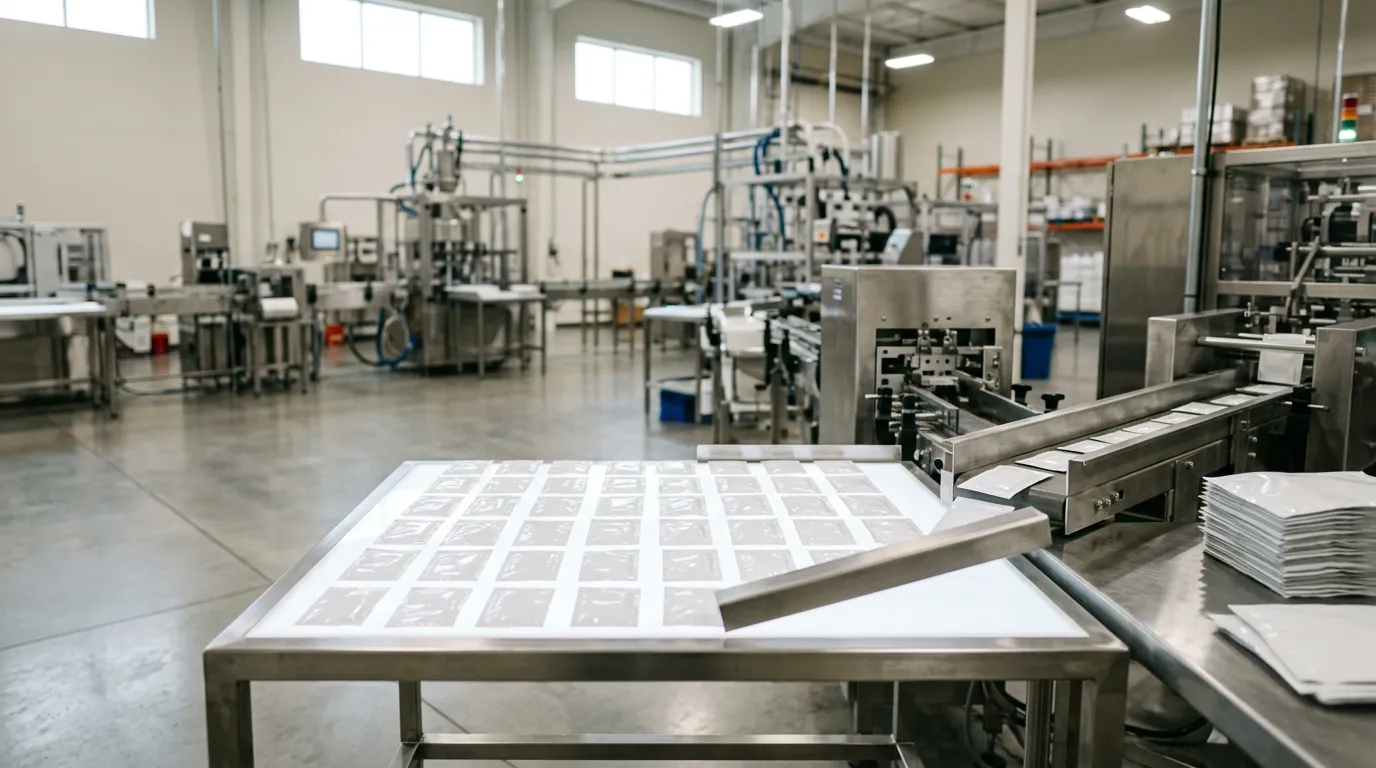
Bleach wipes are bought on the claim panel. If your artwork lists C. difficile with a defensible contact time, you are in a procurement conversation that quat wipes cannot enter. We formulate stabilised hypochlorite on a bleach-compatible substrate, validate available chlorine at end of shelf life, and support the EPA registration work that makes the claim stick.
✓Stabilised 0.55% NaOCl, validated at end of shelf life
✓Bleach-compatible substrate — no wet-strength loss on ageing
✓EPA registration and List K sporicidal claim support
✓Claim panel and dwell-time table built into your artwork
✓Outbreak-kit sachets and terminal-clean large formats
FAQ
Bleach wipes FAQ
Do bleach wipes kill C. difficile?
Yes, and that is the main reason to use them. C. difficile persists as a spore that resists alcohol, quaternary ammonium and most other disinfectants. Sodium hypochlorite at 5,500 ppm available chlorine is sporicidal, typically with a four-minute contact time. The surface must be pre-cleaned and must stay visibly wet for the full dwell period or the claim does not hold.
What concentration of bleach do hospitals use?
0.55% sodium hypochlorite — about 5,500 ppm available chlorine, equivalent to a 1:10 dilution of household bleach. Commercial wipes use a stabilised version of that concentration so the available chlorine is still at label strength when the pack is opened, which a hand-mixed dilution cannot guarantee.
Do bleach wipes work on norovirus?
Yes. Norovirus is non-enveloped and therefore resistant to alcohol and unreliable with quats, but hypochlorite inactivates it readily. This is why bleach wipes are the standard response in norovirus outbreaks in schools, care homes, cruise ships and hospitality.
Why do bleach wipes have a shorter shelf life?
Available chlorine decays over time, even in a sealed pack — that is chemistry, not a formulation flaw. We specify 12–18 months and validate strength at end of shelf life rather than only at release. Any bleach wipe claiming a 36-month shelf life should be asked for its end-of-life potency data.
Can bleach wipes damage surfaces?
Yes, and the label must say so. Sodium hypochlorite is corrosive to some metals — particularly aluminium and unprotected steel — and will discolour fabrics, carpets and unsealed wood. It should be used on hard, non-porous, bleach-tolerant surfaces, and some protocols call for a water rinse afterwards on stainless steel.
Do I need to clean the surface before using a bleach wipe?
Yes. Organic soil — blood, faeces, food, body fluids — consumes available chlorine before it reaches the pathogen, so applying bleach to a visibly dirty surface wastes most of the active. The standard protocol is clean first, then disinfect, which is why many facilities pair bleach wipes with a quat wipe that cleans and disinfects in one step for routine work.
Other disinfectant wipes we make
Bleach is a targeted tool. These are the chemistries that handle the other 90% of daily disinfection.
Disinfectant
Quat Wipes
The daily-driver: cleans and disinfects in one pass, low odour, material-safe.
View details →
Disinfectant
Hydrogen Peroxide Wipes
Norovirus efficacy without the odour or the corrosion risk.
View details →
Antiseptic
Alcohol Wipes
For skin and small device prep — where bleach must never be used.
View details →
Add a sporicidal wipe to your range
Stabilised 0.55% sodium hypochlorite, bleach-compatible substrate, EPA claim support. Made in the USA.